
Gum disease affects nearly half of all adults over 30, making it one of the most common threats to your oral health. The tricky part is that it often develops silently, causing damage before you notice anything is wrong.
It’s not all bad news, however.
When you know what to look for, you can catch gum disease early, when it’s easiest to treat and even reverse. This guide will walk you through everything you need to know about identifying gum disease, from the earliest warning signs to the more advanced symptoms that require immediate attention.
Why Early Detection of Gum Disease Matters
Your gums do more than frame your smile. They form a protective seal around your teeth, keeping harmful bacteria from reaching the bone and tissue underneath. When gum disease develops, that protection breaks down.
When left untreated, what starts as mild inflammation can progress to periodontal disease, a serious condition that destroys the bone supporting your teeth. This bone loss is permanent, and advanced periodontal disease remains the leading cause of tooth loss in adults.
What makes early detection so valuable is that the earliest form of gum disease, called gingivitis, is completely reversible. With proper treatment and improved oral hygiene habits, your gums can return to full health. Once the disease progresses beyond this initial stage, the focus shifts from reversal to management.
Recognizing the signs early puts you in control.
What Healthy Gums Should Look Like
Before you can spot problems, you need to know what healthy gums look like. Take a moment to examine your mouth in a mirror with good lighting.
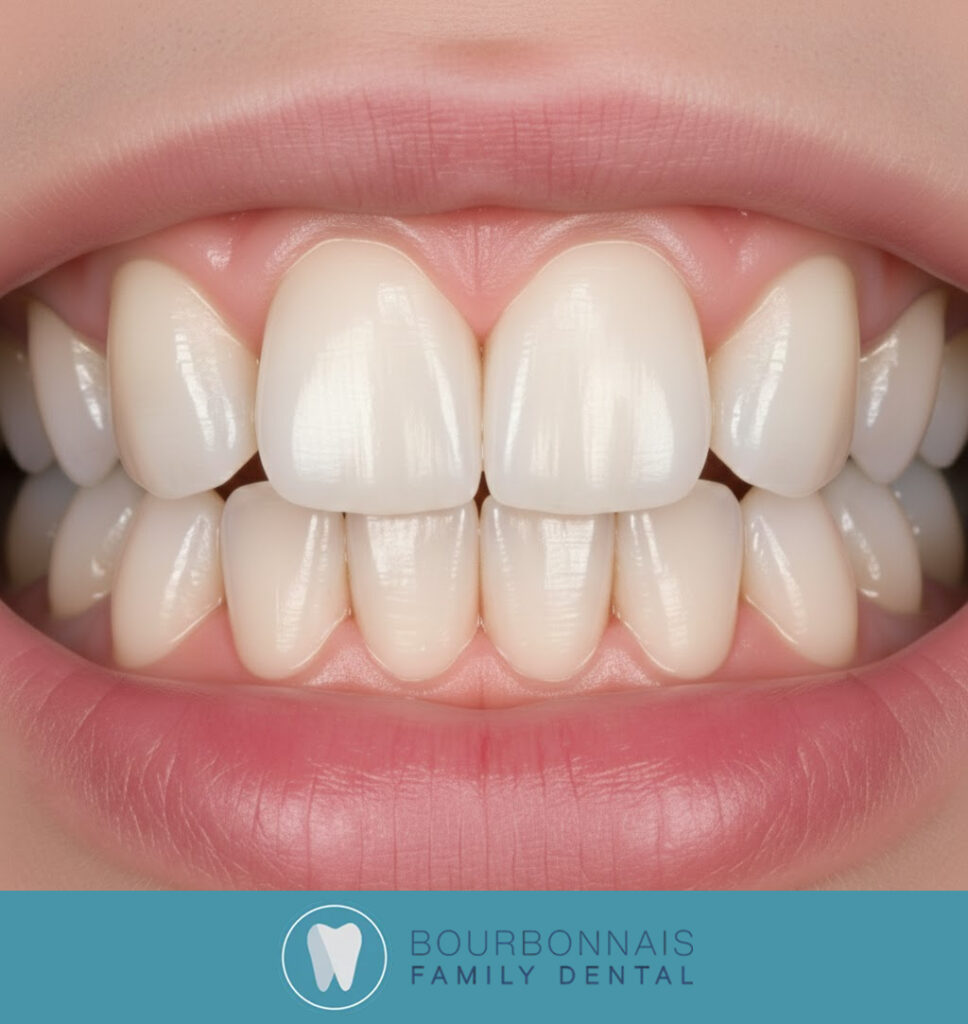
Healthy gums appear pink, though the exact shade varies depending on your skin tone. They may range from coral pink to darker hues of pink or brown. The key is consistency—your gums should be uniform in color without red patches or pale areas.
The texture should be firm and slightly stippled, similar to the surface of an orange peel. Healthy gums fit snugly around each tooth, creating a tight seal. They don’t bleed when you brush or floss, and they shouldn’t feel tender or swollen.
Keep this baseline in mind as you learn to identify the warning signs of gum disease.
Related Article: Is Gingivitis Preventable?

The Warning Signs of Gum Disease You Can See
Visual changes in your gums often provide the first clues that something isn’t right. During your next look in the mirror, check for these common indicators of declining oral health.
Red or Purple Discoloration
Healthy gums maintain a consistent pink tone. When plaque buildup triggers inflammation, gums often turn red or even purplish, particularly along the gumline where teeth and gums meet. This color change is your body’s way of signaling that something needs attention.
Swollen or Puffy Gums
Inflammation causes gum tissue to swell and lose its firm texture. Instead of lying flat against your teeth, affected gums may appear rounded, enlarged, or puffy. Even subtle swelling can indicate the early stages of gum disease.
Receding Gumline
If your teeth appear longer than they used to, your gums may be pulling away from the tooth surface. This recession exposes the sensitive tooth roots and creates pockets where bacteria thrive. Many people first notice this form of gum disease when they see more of their tooth than before.
Visible Pus Between Teeth and Gums
The presence of pus indicates active infection and represents a more advanced stage of gum disease. This symptom requires prompt attention from a dentist, as infection can spread and cause significant damage to your oral health.
Changes in Your Bite
Shifting teeth or a bite that feels different when you close your mouth can signal bone loss from advancing periodontal disease. When the structures supporting your teeth weaken, teeth may move out of their normal positions.
Gaps Developing Between Teeth
New spaces appearing between teeth that previously sat close together suggest underlying structural changes. As gum disease progresses and bone loss occurs, teeth lose their stable foundation and may drift apart.
Symptoms of Gum Disease You Can Feel or Notice
Not all signs of gum disease are visible. Pay attention to what you experience during daily activities and throughout your day, as these sensations often reveal problems that a mirror cannot show.
- Persistent Bad Breath: The bacteria responsible for gum disease produce foul-smelling compounds as they multiply. Chronic bad breath that lingers despite good oral hygiene often signals an underlying problem.
- Bleeding Gums: Healthy gums don’t bleed from routine brushing or flossing. Pink in the sink is one of the earliest and most reliable indicators of gum inflammation.
- Tenderness or Pain When Chewing: Discomfort while eating, especially with harder foods, can develop as gum disease progresses beyond its initial stage.
- Sensitivity to Hot and Cold: When gums recede, they expose tooth roots that lack protective enamel. That sharp twinge from coffee or ice water may indicate gum disease affecting your tooth structure.
- Loose Teeth: Adult teeth should feel firmly anchored. Any wobbling or movement suggests bone loss has occurred, indicating an advanced stage of gum disease requiring immediate attention.
The Stages of Gum Disease
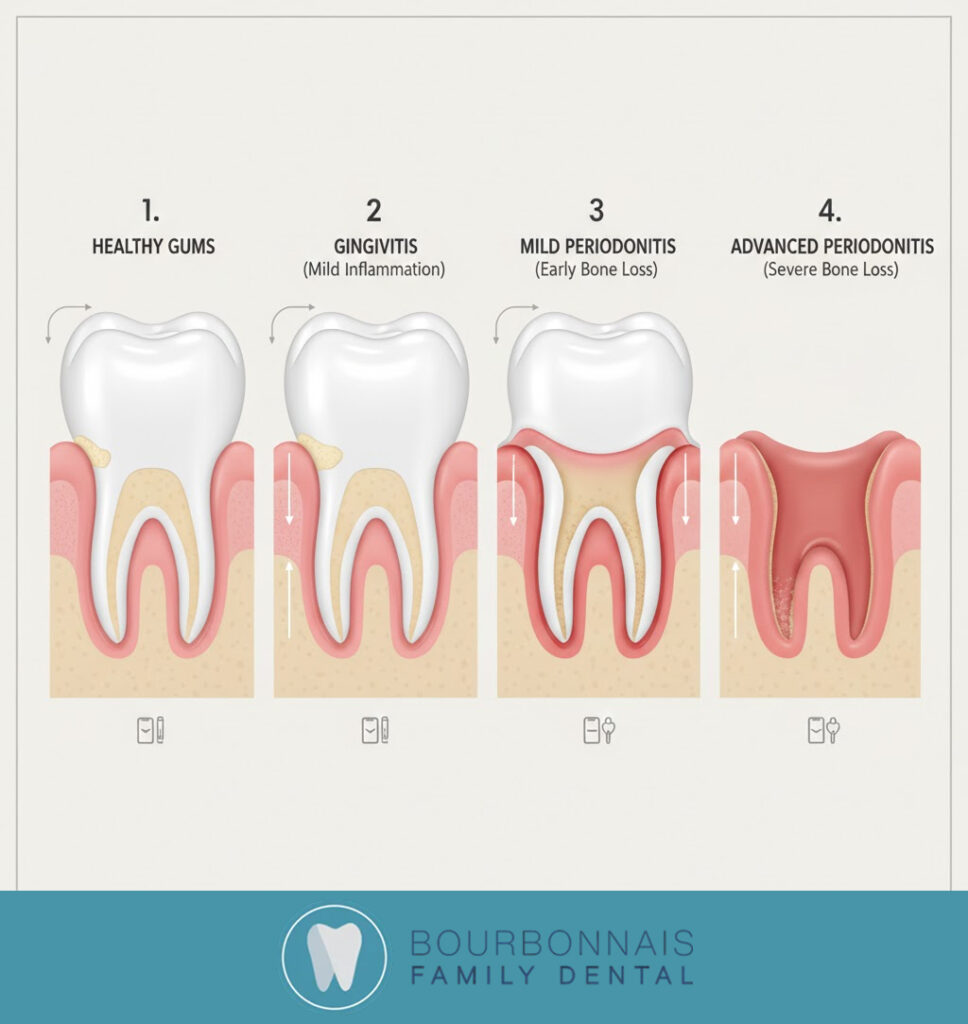
Gum disease progresses through stages, from early inflammation to advanced periodontal disease. Knowing your stage is vital for treatment. While progression isn’t inevitable and early stages can be maintained with professional care, bone loss, once present, cannot be naturally regenerated, making early detection critical for preserving your smile.
1. Gingivitis
This initial stage of gum disease involves inflammation of the gums without any bone loss. Symptoms include redness, swelling, and bleeding during brushing. The good news is that gingivitis is fully reversible with professional cleaning and improved oral hygiene at home.
2. Mild Periodontitis
At this stage, the infection has spread below the gumline, and early bone loss has begun. Pockets form between teeth and gums, typically measuring 4–5 millimeters deep. Professional treatment becomes essential to prevent further damage.
3. Moderate Periodontitis
Deeper pockets develop, measuring 6–7 millimeters, and more significant bone loss occurs. Teeth may begin to loosen as their foundation weakens. At this stage, bacteria can enter the bloodstream and potentially affect your overall health.
4. Advanced Periodontitis
This severe form of gum disease involves substantial bone loss that threatens tooth stability. Deep pockets harbor aggressive bacteria that are difficult to eliminate. Without intensive treatment, tooth loss becomes likely, and surgical intervention may be necessary.
Taking Action to Protect Your Gum Health
Identifying gum disease is the first step. Taking action is what truly protects your smile and preserves your oral health for years to come.
If you’ve noticed any of the warning signs discussed in this guide, don’t wait for your next routine appointment. Early intervention makes treatment simpler, more comfortable, and far more successful.
At Bourbonnais Family Dental, we’re committed to helping you maintain optimal oral health at every stage of life. Our experienced team provides thorough, gentle evaluations and personalized treatment plans designed to address your specific needs. Whether you’re dealing with early gingivitis or more advanced periodontal disease, we’re here to help you get back on track.
Contact Bourbonnais Family Dental today to schedule your comprehensive gum health evaluation. Your healthier smile is waiting.